
Wanda Stolle loose ends
Berlin 10 Sept – 7 Nov 2026



LOOSE ENDS
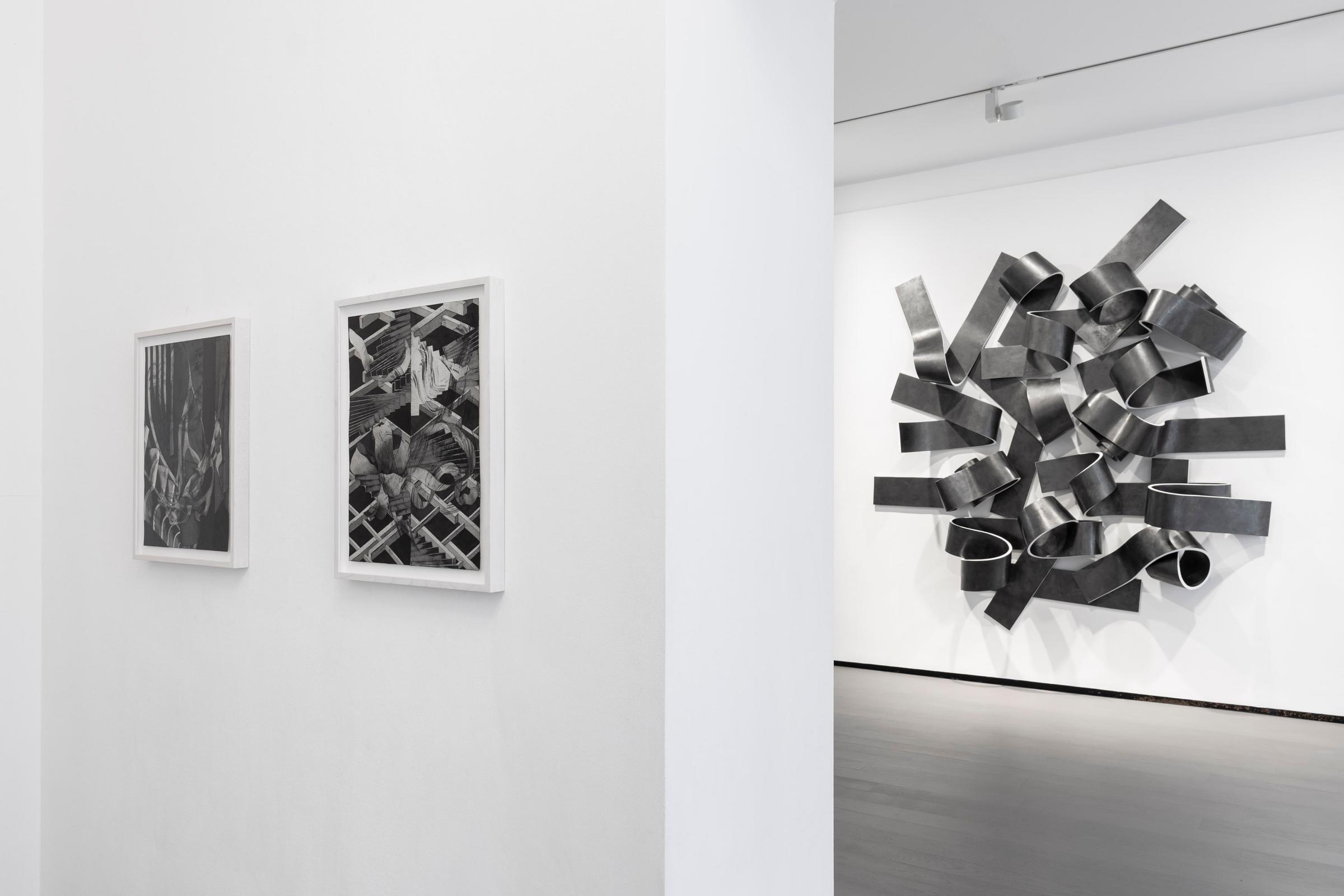
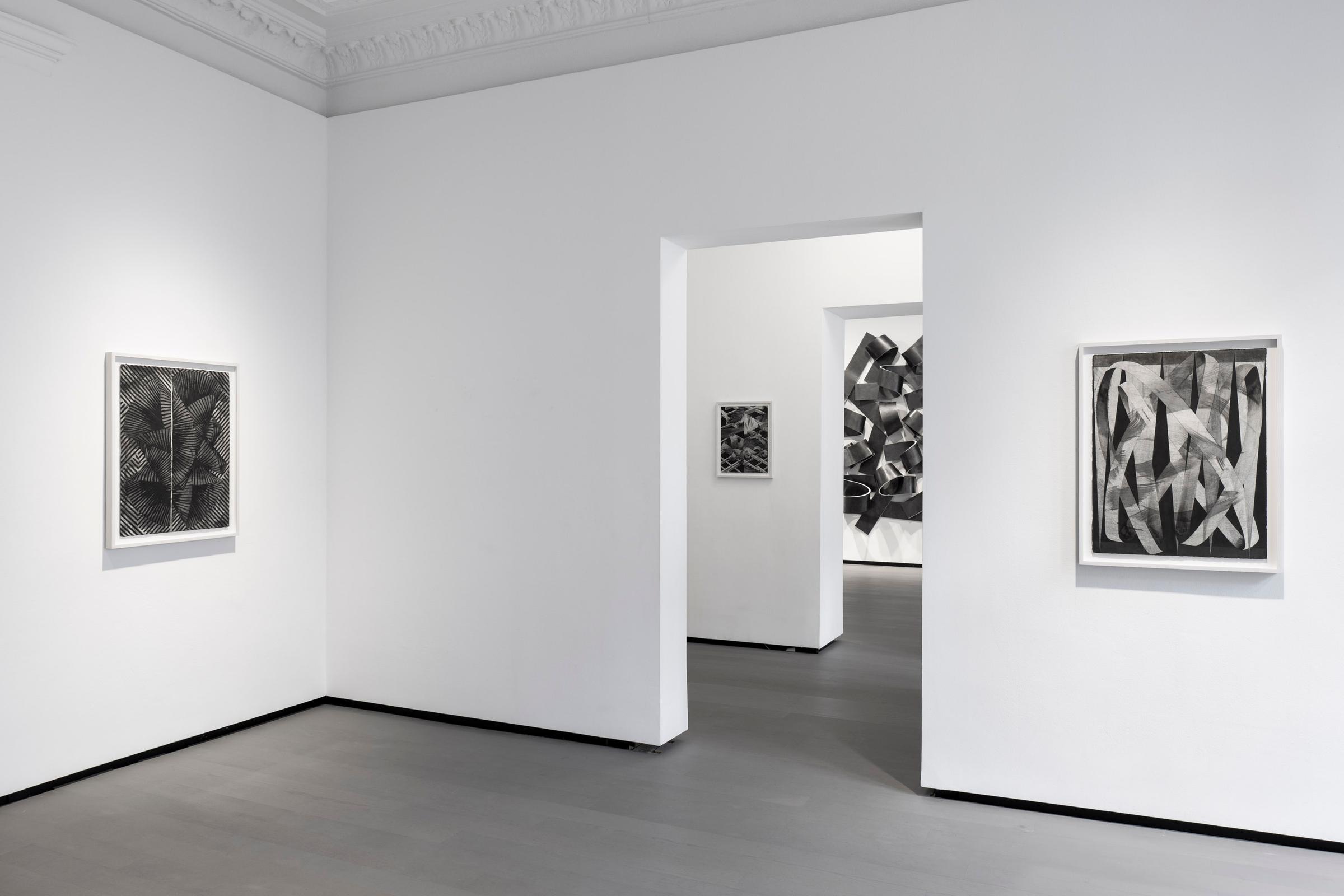
Wanda Stolle’s works emerge from the entanglement of drawing, relief, and sculpture. Her pieces can be assigned neither clearly to the plane nor to space; rather, they insist on an intermedial condition in which graphic, painterly, and sculptural procedures interpenetrate. For Loose Ends, Stolle brings together drawings and a new wall sculpture that, in different ways, revolve around questions of folding, layering, surface effect, and spatial articulation.
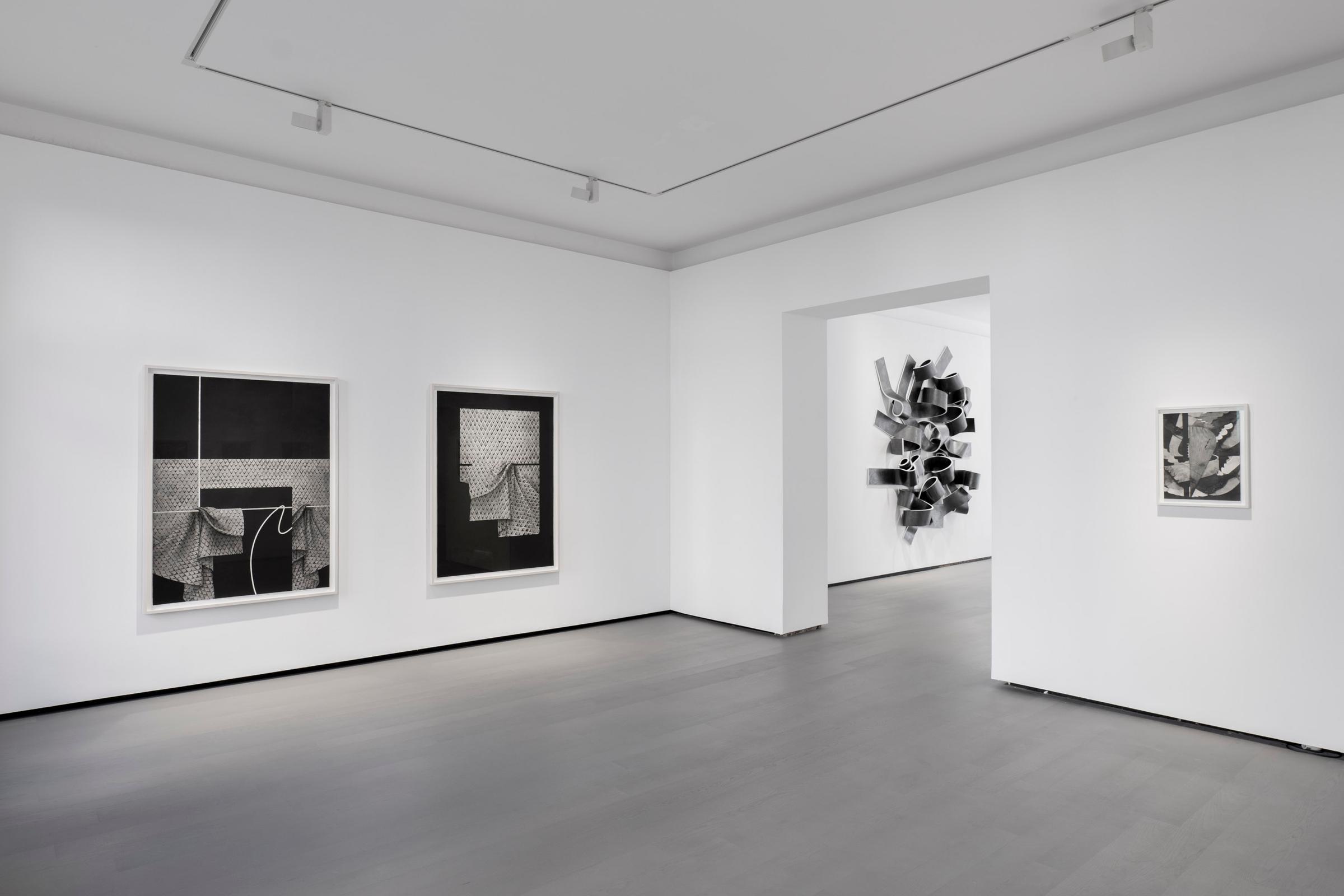
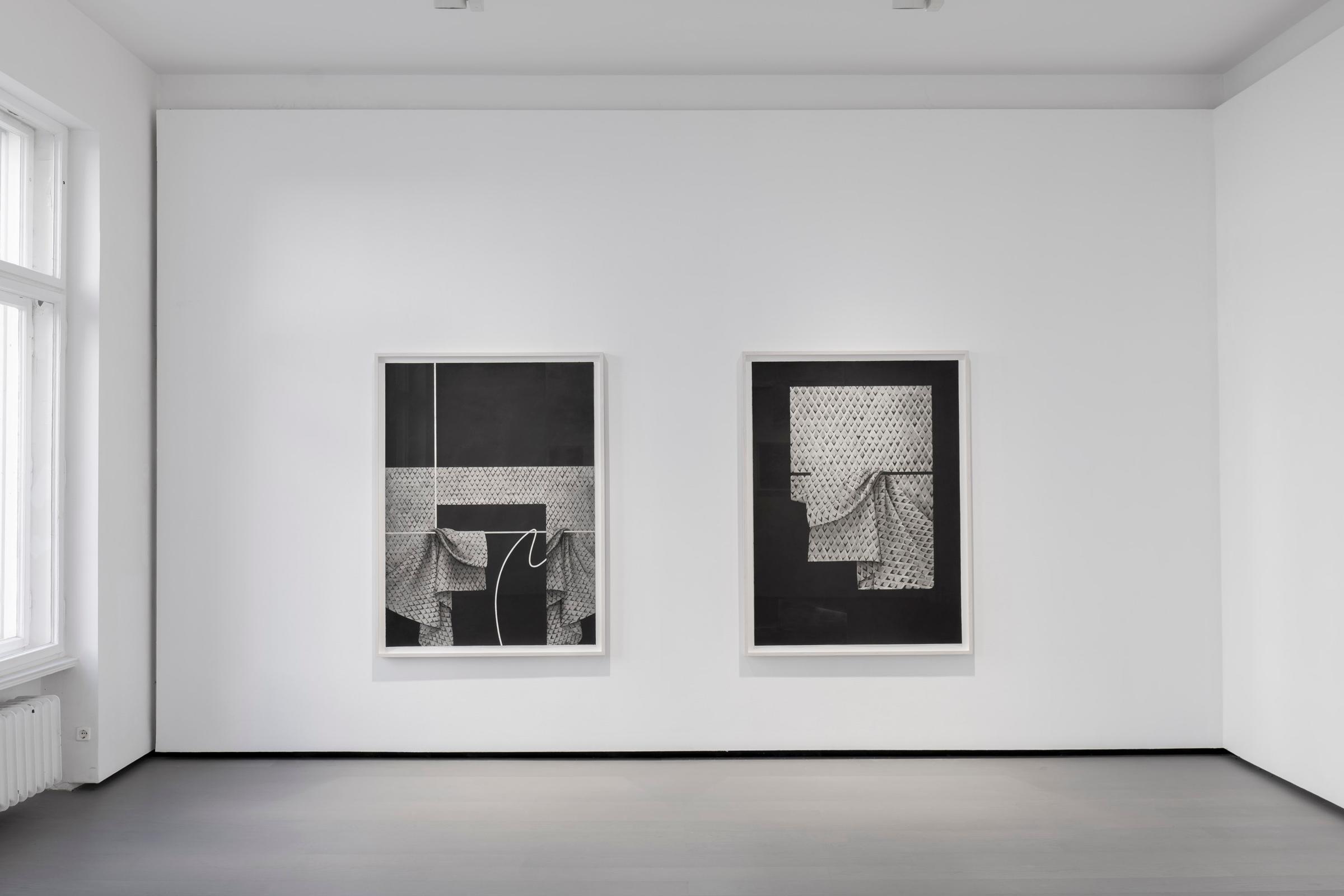
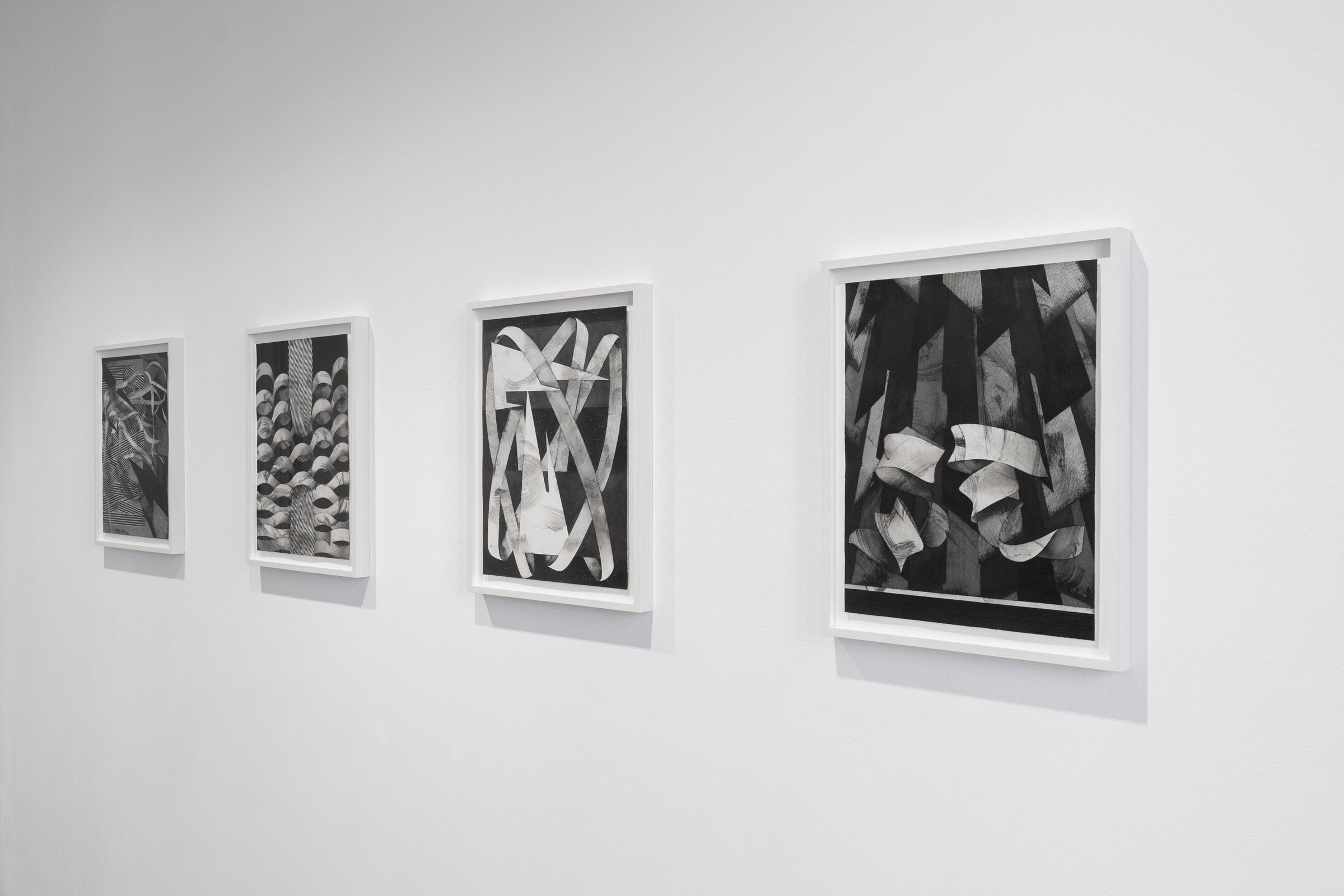
Within the exhibited drawings, curtains assume a particular function. They are not to be understood merely as a motif, but as a formal and conceptual dispositif. The curtain structures visibility: it conceals and reveals, marks a threshold, and organizes the relation between foreground and background, surface and depth. In Stolle’s treatment, this historically resonant form of drapery is released from its representational context and transferred into an abstract vocabulary built from folds, condensations, axes, incisions, and displacements.
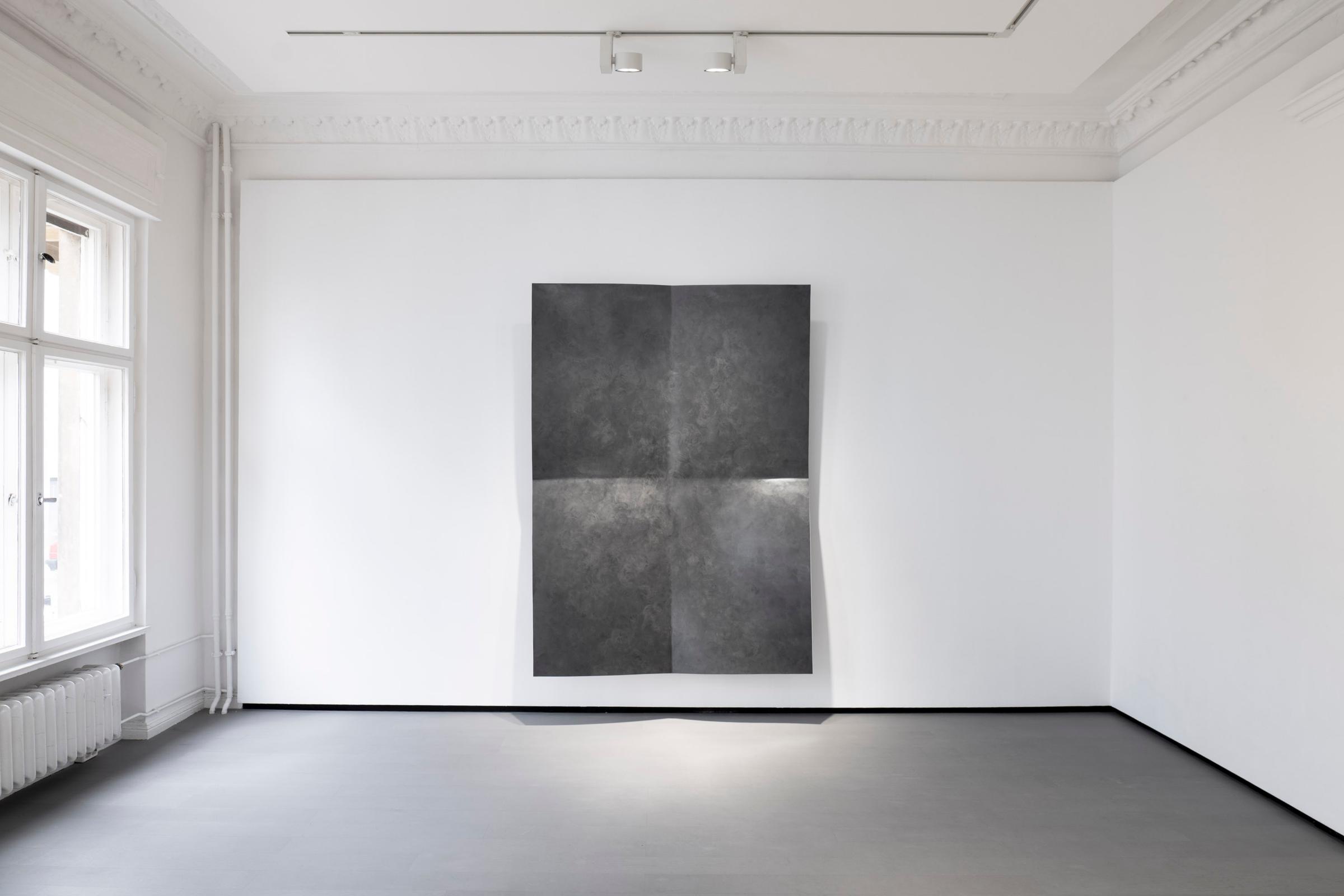
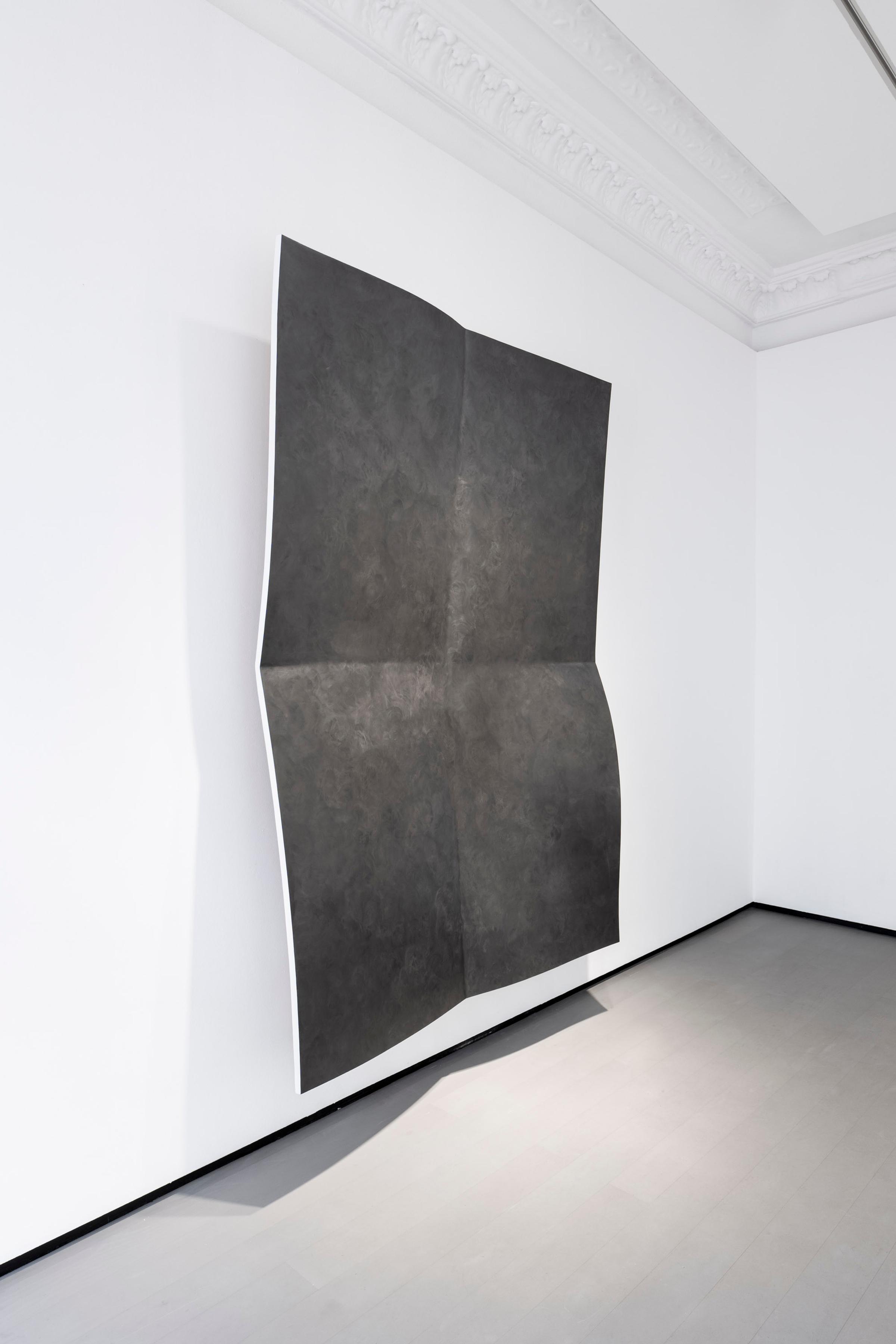
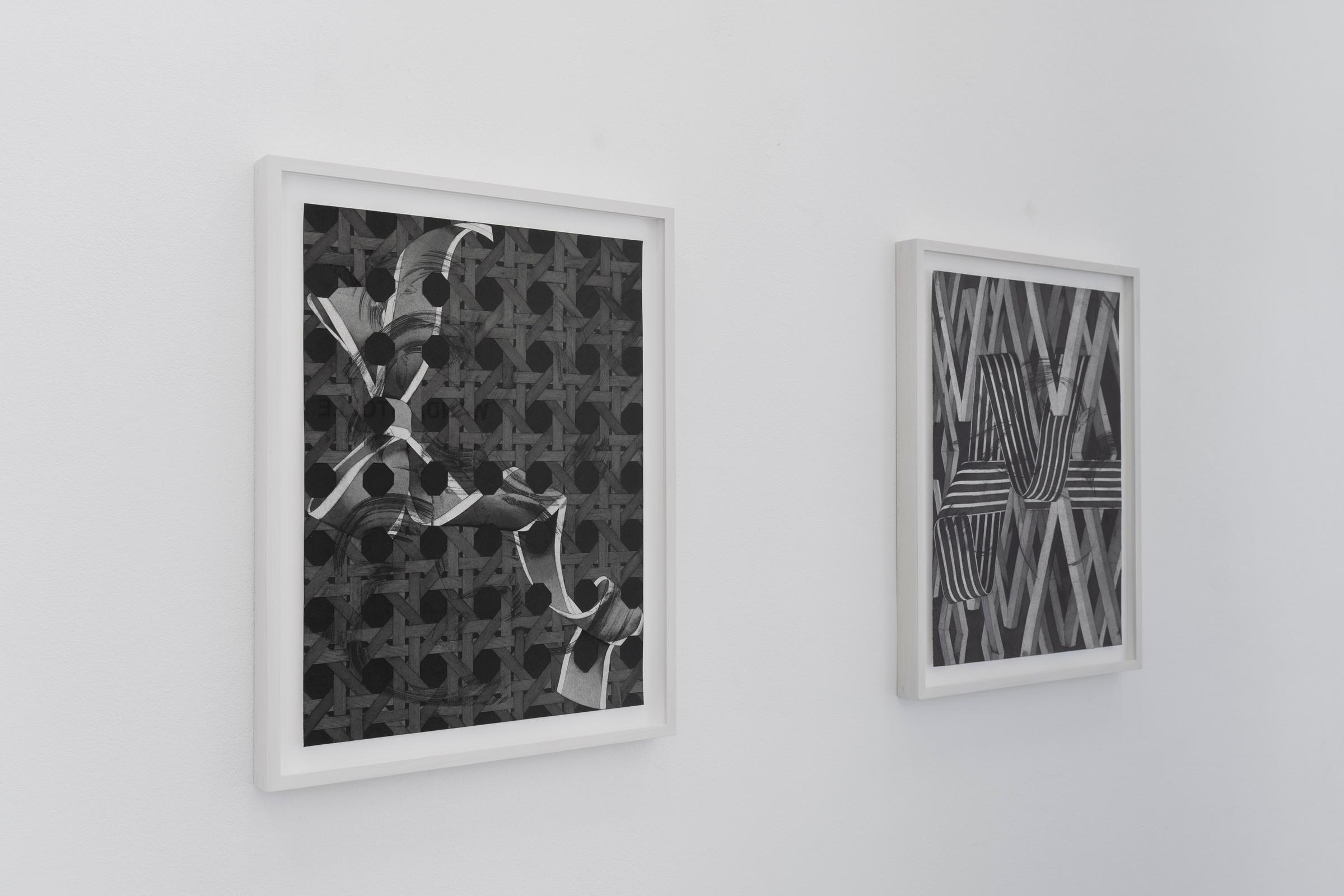
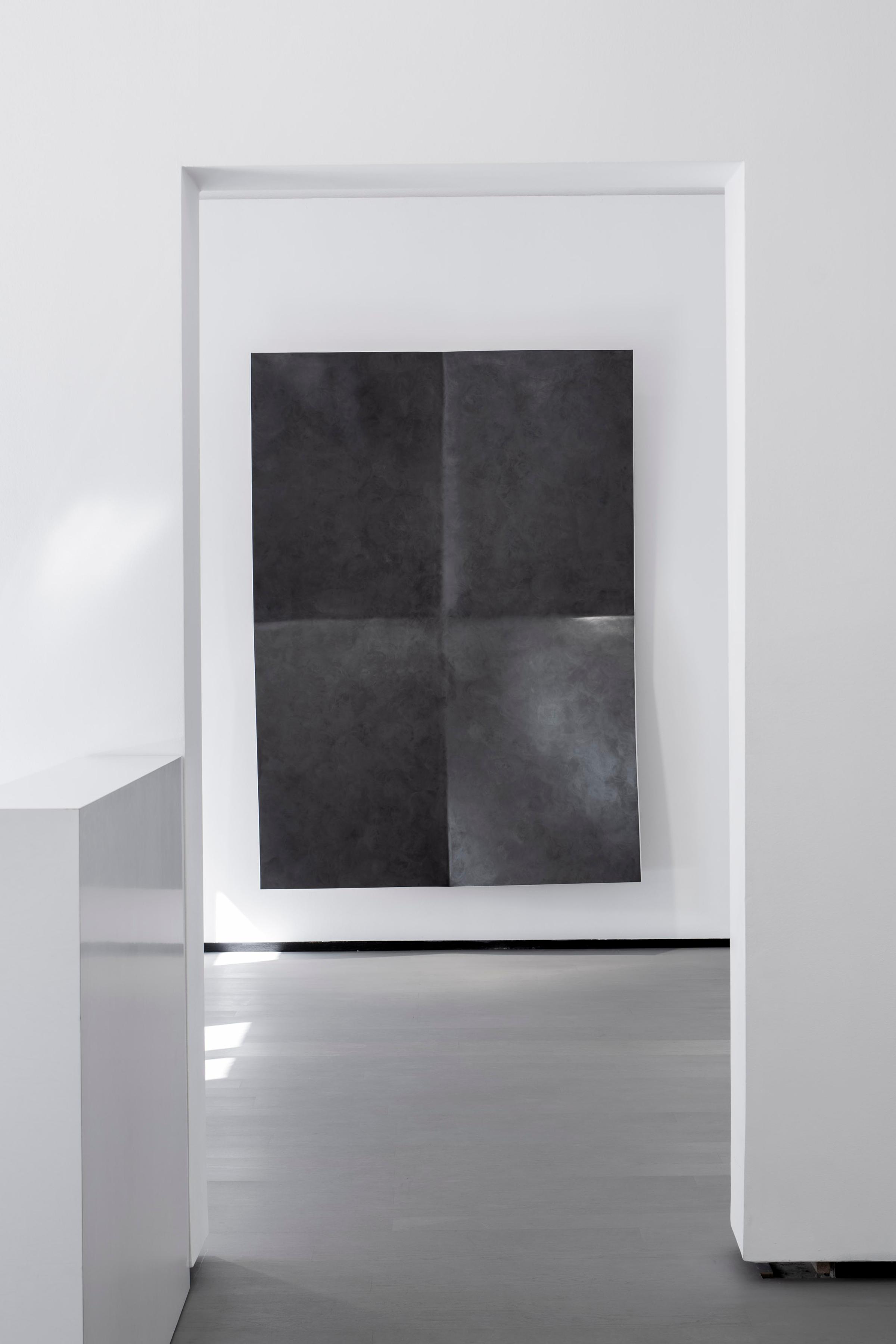
The drawings are produced through a process that treats paper not as a neutral support, but as a material that offers resistance and can be physically shaped. Stolle incises, cuts, scrapes, and sands the surface, saturates it with ink, shellac, and other painting materials, washes sections out again, and in this way generates a dense tissue of inscriptions and erasures. As a result, the sheets acquire a pronounced physical presence. The line does not appear here primarily as a contouring element, but as the trace of an intervention; the surface not as a closed ground, but as a zone of concentration, abrasion, and reworking. In this context, the curtains can be read as pictorial orders in which graphic inscription and sculptural thinking mutually permeate one another.
Characteristic of Stolle’s work, moreover, is her differentiated handling of tonal values. From a palette reduced to black, white, and a complex spectrum of grays, she develops surfaces in which matte and glossy zones, diffuse transitions, and sharp contrasts converge. These modulated grays do not serve merely an atmospheric function; they are crucial to the spatial organization of the works. Light and shadow do not appear as secondary effects, but as constitutive elements of the work’s genesis.
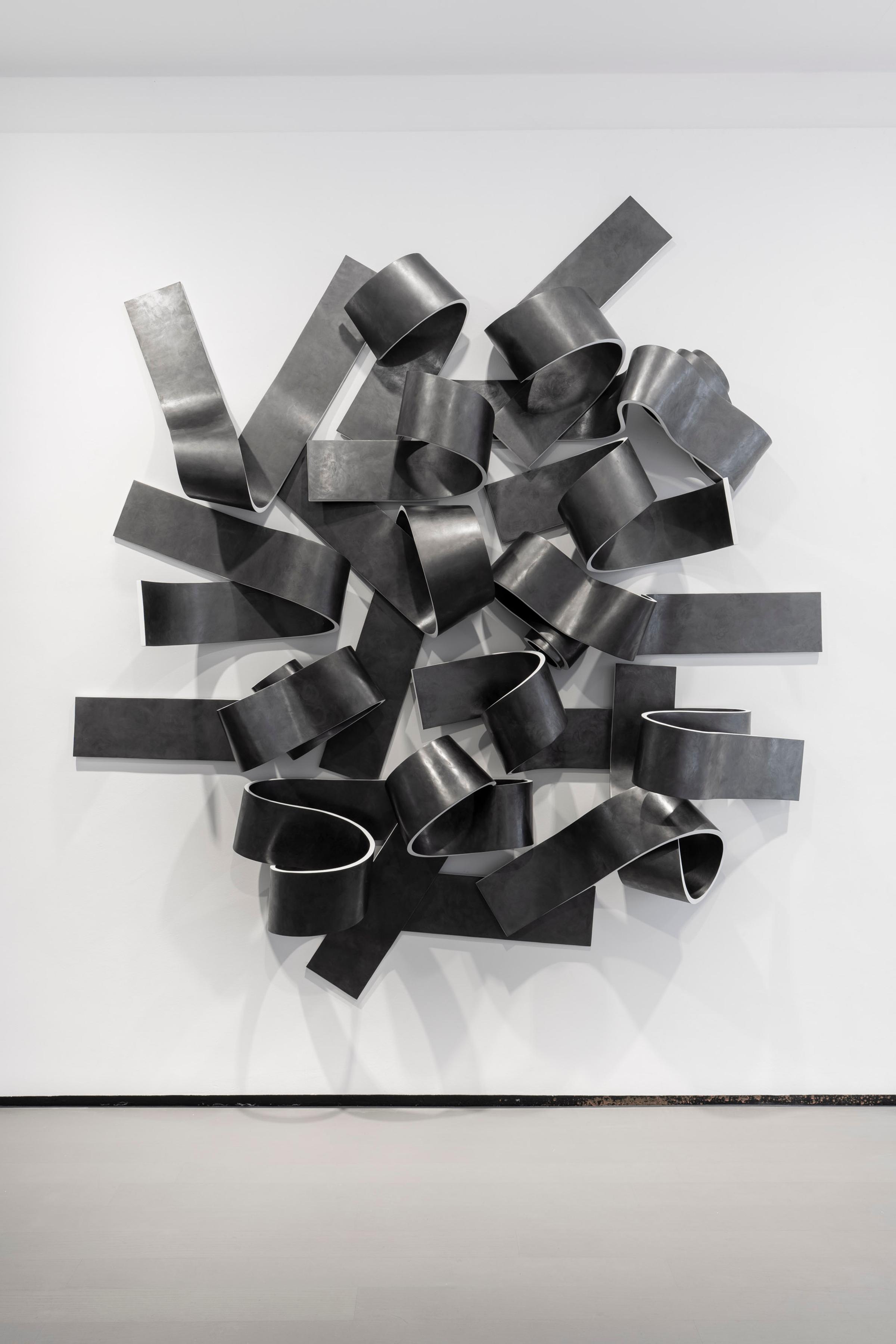
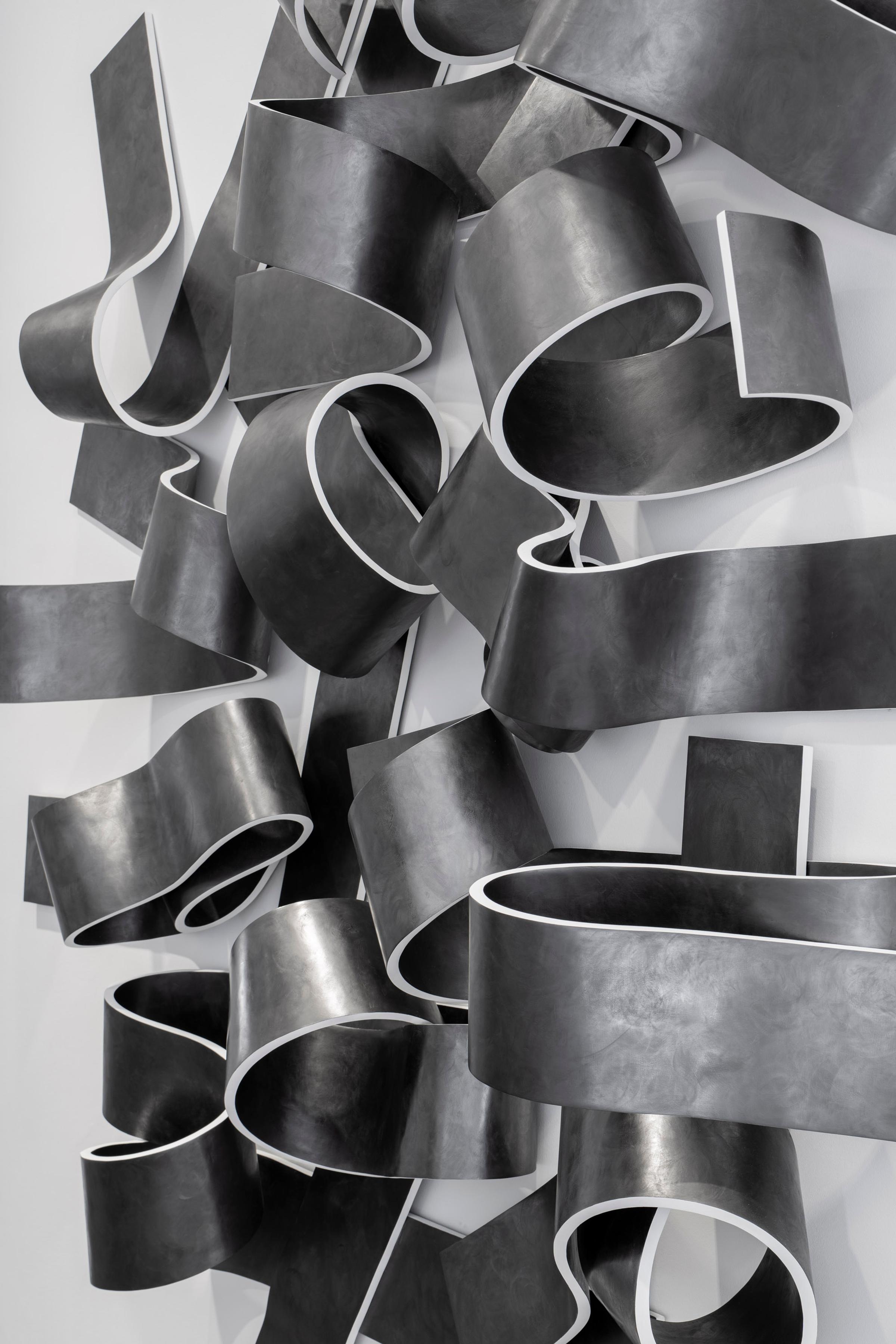
The new wall sculpture extends these questions into space. The wall sculpture is inspired by Maria Knotenlöserin (Mary, Undoer of Knots), the Augsburg devotional image painted by Johann Georg Melchior Schmidtner around 1700, whose motif of loosening and disentangling is here translated into an abstract, ribbon-like form. At the same time, the work connects to Stolle’s earlier sculptures, whose interwoven movements evoke an impression of suspended dynamism. Made of bent wood and coated with graphite, the object condenses torsion, tension, and folding into a complex spatial figure. As in the drawings, the relation between surface and volume, inner and outer side, contour and mass is not fixed here either, but transformed into a mobile configuration.
The title Loose Ends thus refers not only to a formal vocabulary of the open, the loosened, and the unfinished, but also to a method. Stolle’s works do not aim at formal closure, but at states of suspension in which orders emerge and simultaneously recede again. It is precisely here that their precision lies: in the rigorous probing of those transitions in which drawing shifts into objecthood and sculpture takes shape as their spatial articulation.
Wanda Stolle’s works emerge from the entanglement of drawing, relief, and sculpture. Her pieces can be assigned neither clearly to the plane nor to space; rather, they insist on an intermedial condition in which graphic, painterly, and sculptural procedures interpenetrate. For Loose Ends, Stolle brings together drawings and a new wall sculpture that, in different ways, revolve around questions of folding, layering, surface effect, and spatial articulation.
Within the exhibited drawings, curtains assume a particular function. They are not to be understood merely as a motif, but as a formal and conceptual dispositif. The curtain structures visibility: it conceals and reveals, marks a threshold, and organizes the relation between foreground and background, surface and depth. In Stolle’s treatment, this historically resonant form of drapery is released from its representational context and transferred into an abstract vocabulary built from folds, condensations, axes, incisions, and displacements.
The drawings are produced through a process that treats paper not as a neutral support, but as a material that offers resistance and can be physically shaped. Stolle incises, cuts, scrapes, and sands the surface, saturates it with ink, shellac, and other painting materials, washes sections out again, and in this way generates a dense tissue of inscriptions and erasures. As a result, the sheets acquire a pronounced physical presence. The line does not appear here primarily as a contouring element, but as the trace of an intervention; the surface not as a closed ground, but as a zone of concentration, abrasion, and reworking. In this context, the curtains can be read as pictorial orders in which graphic inscription and sculptural thinking mutually permeate one another.
Characteristic of Stolle’s work, moreover, is her differentiated handling of tonal values. From a palette reduced to black, white, and a complex spectrum of grays, she develops surfaces in which matte and glossy zones, diffuse transitions, and sharp contrasts converge. These modulated grays do not serve merely an atmospheric function; they are crucial to the spatial organization of the works. Light and shadow do not appear as secondary effects, but as constitutive elements of the work’s genesis.
The new wall sculpture extends these questions into space. The wall sculpture is inspired by Maria Knotenlöserin (Mary, Undoer of Knots), the Augsburg devotional image painted by Johann Georg Melchior Schmidtner around 1700, whose motif of loosening and disentangling is here translated into an abstract, ribbon-like form. At the same time, the work connects to Stolle’s earlier sculptures, whose interwoven movements evoke an impression of suspended dynamism. Made of bent wood and coated with graphite, the object condenses torsion, tension, and folding into a complex spatial figure. As in the drawings, the relation between surface and volume, inner and outer side, contour and mass is not fixed here either, but transformed into a mobile configuration.
The title Loose Ends thus refers not only to a formal vocabulary of the open, the loosened, and the unfinished, but also to a method. Stolle’s works do not aim at formal closure, but at states of suspension in which orders emerge and simultaneously recede again. It is precisely here that their precision lies: in the rigorous probing of those transitions in which drawing shifts into objecthood and sculpture takes shape as their spatial articulation.
Artists