
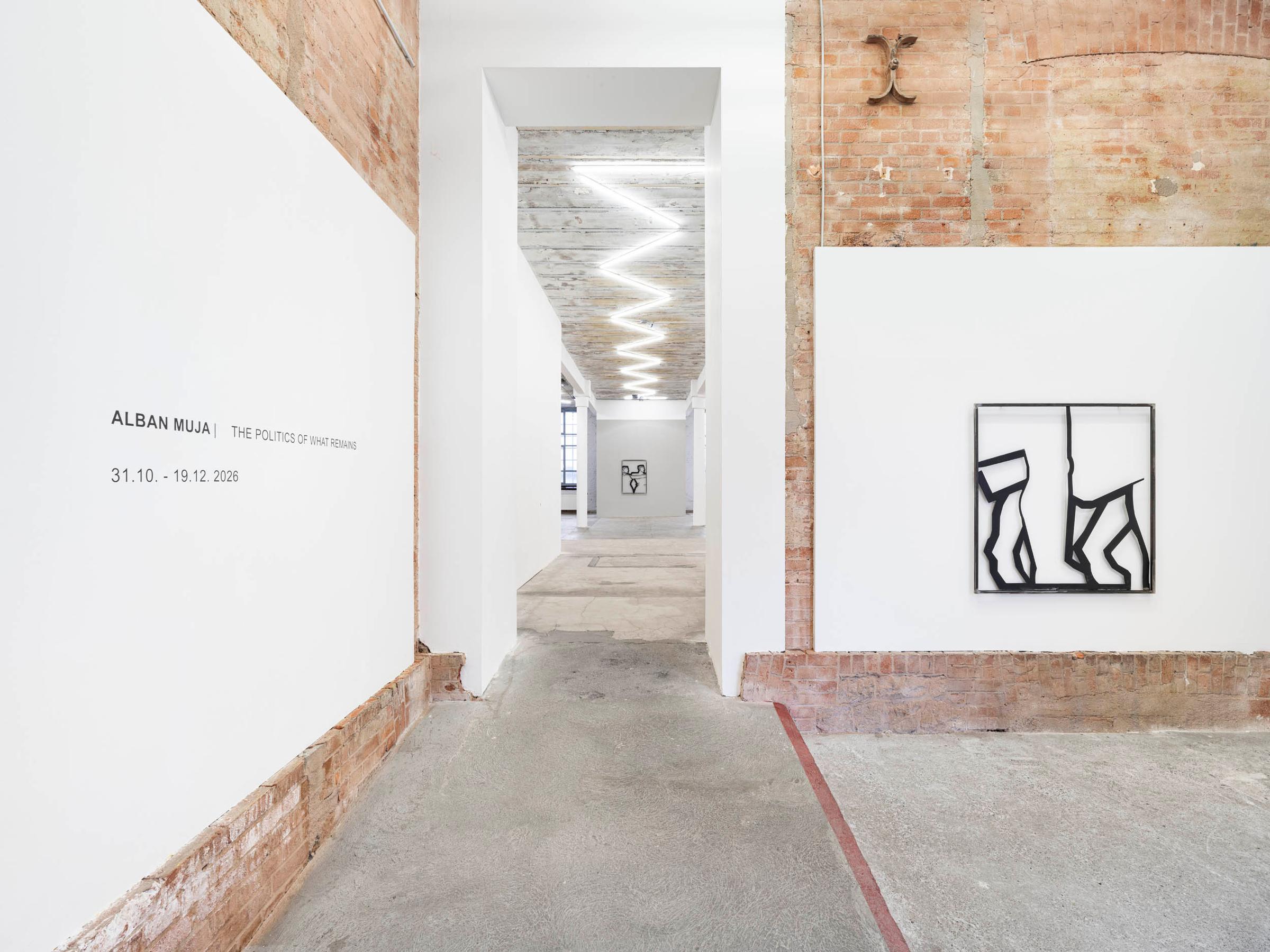
Alban Muja The Politics of What Remains
Leipzig 31 Oct – 19 Dec 2026





The Architecture of Memory: Alban Muja’s The Politics of What Remains
In the afterword to his small volume of Martin Luther’s table talks, the Dresden-born theologian and poet Christian Lehnert recounts an anecdote that speaks volumes about the power of collective memory: “When I was a pastor in the eastern Ore Mountains some years ago, one of the older clergymen told me how, upon entering the vestibule of his church, all the men would first bow reverently before a white wall. No one could say why.” Only when the church was eventually restored, Lehnert continues, did a Marian fresco in blue and red reappear beneath the whitewash.
An image has vanished, the memory of it has faded and dissolved, and yet it has survived across centuries in ritual: a parable of resilient cultural memory and, as Lehnert writes, of the power of the “material vessels of remembrance.” Similar stories are told of churches across Europe, in places shaped by the Reformation. Whitewashing the traces of Catholic devotion was among the milder acts carried out during the great wave of destruction in the sixteenth century that entered history as the Reformation iconoclasm. Particularly in times of social upheaval, works of art have served not only as instruments of propaganda, but also as targets of attack.
What remains, what is removed, and who gets to decide? How do we confront difficult and painful pasts, and how are they inscribed in people’s inner lives? What connects us across eras and political systems? Questions such as these run through the work of the Kosovar visual artist and filmmaker Alban Muja. His art examines the political, economic, and social transformations in Kosovo and explores how they continue to resonate in the present. His exhibition The Politics of What Remains brings many of these themes together. At its center is Time and Transformation, a work concerned with absence, memory, and return.
Its story begins in the early 1970s, when a metal sculpture was installed in the center of Muja’s hometown, Mitrovica, in northern Kosovo. At the time, Kosovo was part of Yugoslavia. The monument, approximately five meters wide and 3.6 meters high, depicted the outlines of one woman and two men holding tools, a dove, and a book, an image of socialist optimism evoking equality, education, and labor. Rather than standing as a solid barrier before the world, the sculpture remained open: one could see through it to the sky, to passersby, and to the surrounding buildings. “For many, it was a quiet symbol of the city, part of everyday life, a place where people met, worked, and passed by,” says Alban Muja, who was born in 1980 and lived in Mitrovica until the age of eighteen, in a city once defined by industry and mining. The monument spoke of that history too — until 2010.
That year it disappeared, removed following a political decision by the city authorities. To this day, no one knows what became of it. For Muja, this absence became the starting point for a long-term artistic reflection that has taken different forms. He is interested in what happens to public objects when the political system that produced them no longer exists. The disappearance of the monument in Mitrovica, Muja says, stands for broader transformations that took place in Kosovo and across the region. For him, education, labor, and equality are ideals whose significance endures across time and political systems. He has no wish to romanticize the past — “certainly not, since Albanians in Kosovo experienced discrimination and oppression even during what some would call ‘normal Yugoslavia.’” Yet, he argues, it is crucial to distinguish between the system that gave rise to a monument and the values for which it stood.
The project first took shape in 2021. Under the title Moving Monument, Muja presented a smaller version of the vanished sculpture at the Autostrada Biennale in Prizren, measuring 3.85 by 2.5 meters. “I hoped that presenting it in a new context would revive discussion about its absence and contribute to its return.” And indeed, in 2023, a version of the monument in its original size returned to its former site in Mitrovica, supported even by the political party that had once pushed for its removal. The action was titled Moving Monument – Moving Back. In the city, there now exists, in a sense, both an old and a new monument at once. Its disappearance and return have themselves become part of the city’s collective memory.
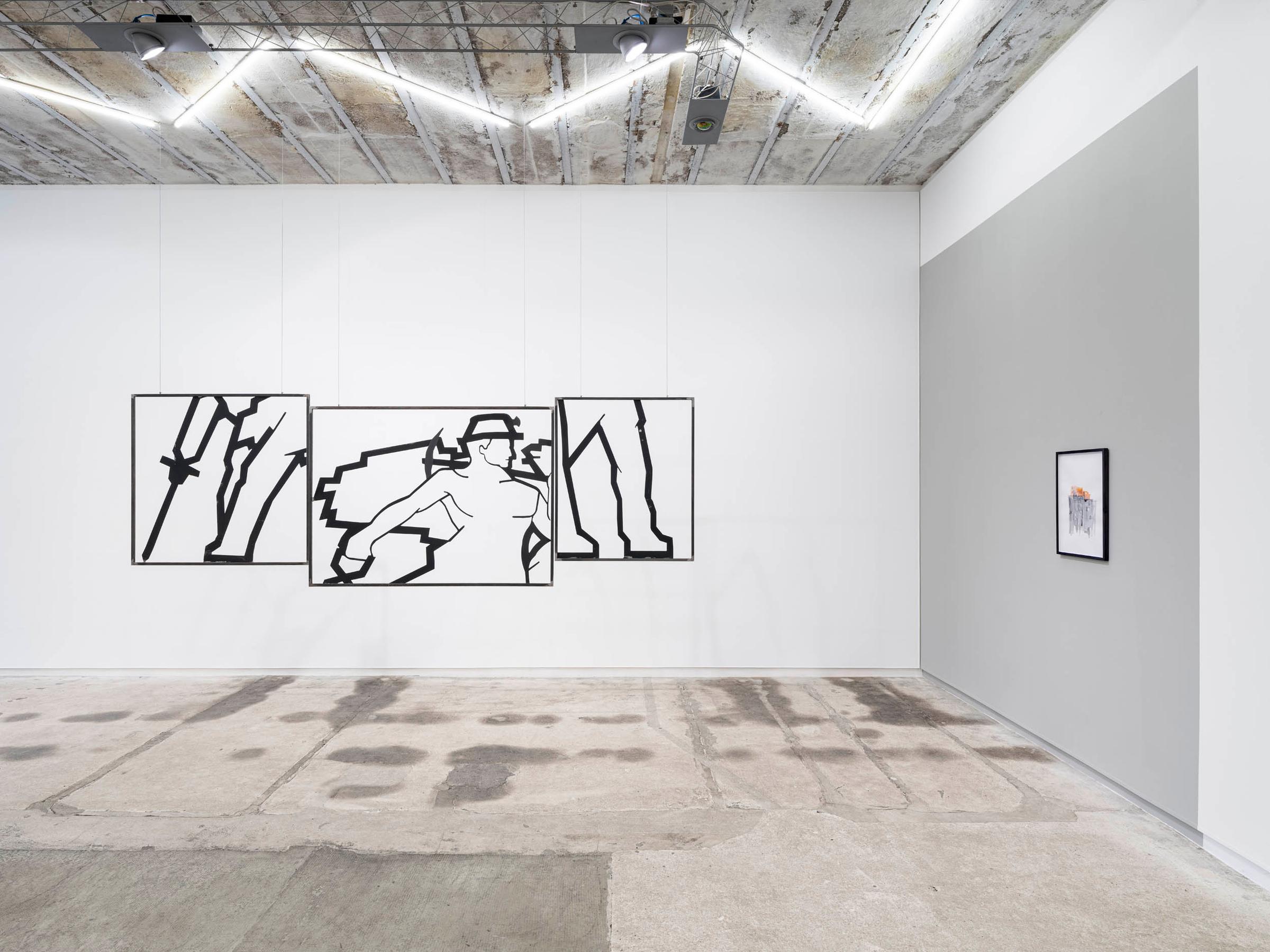
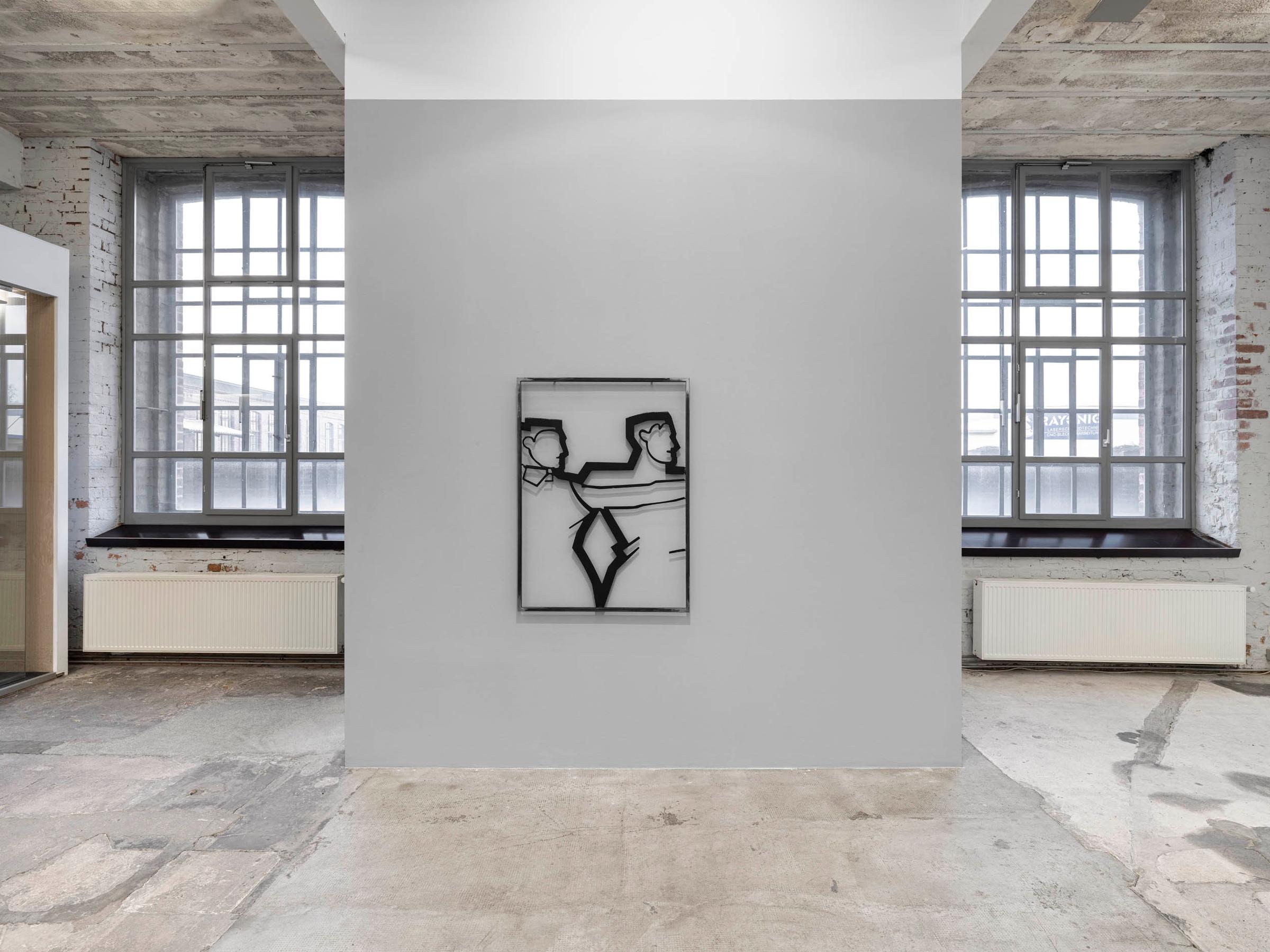
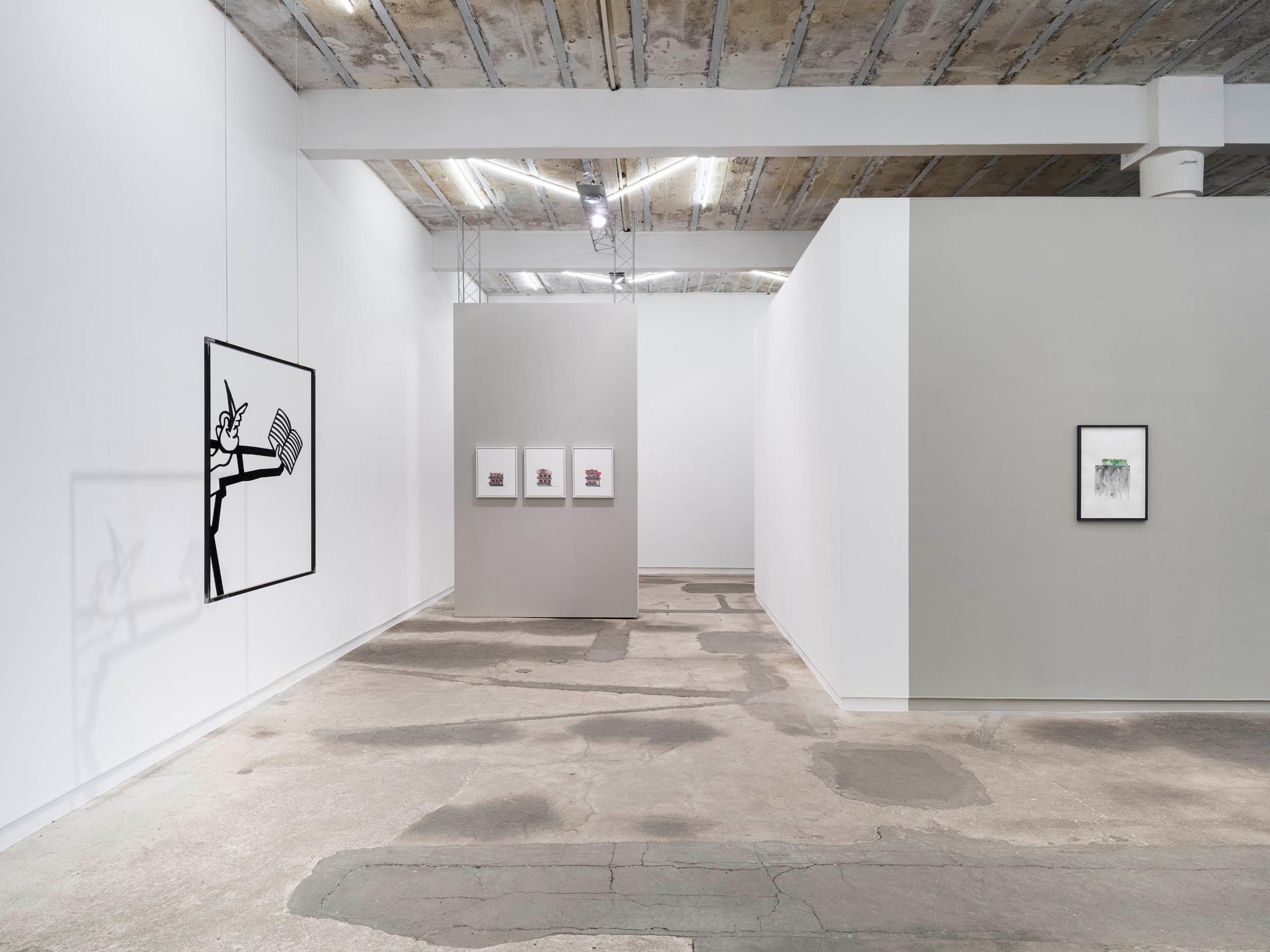
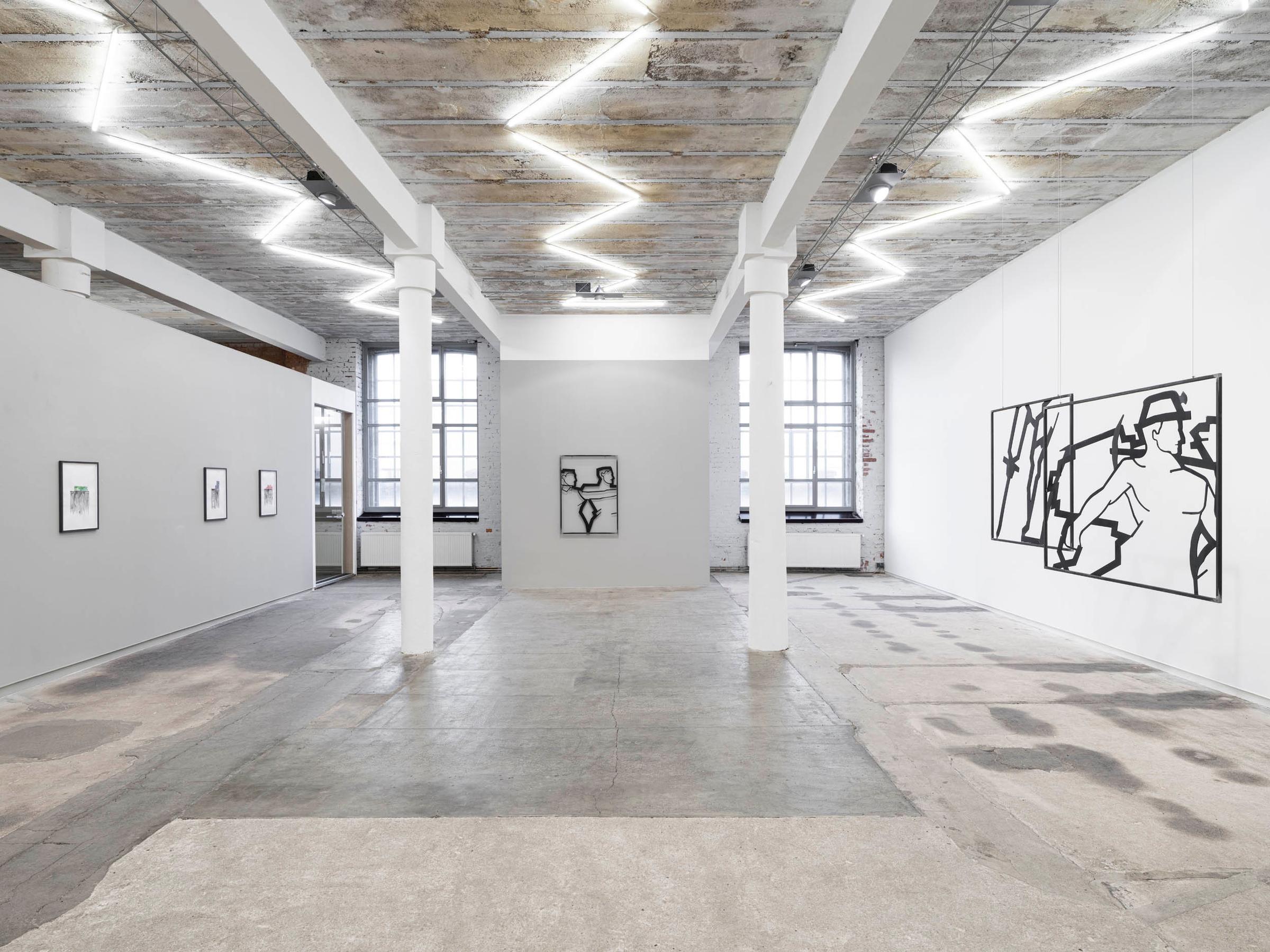
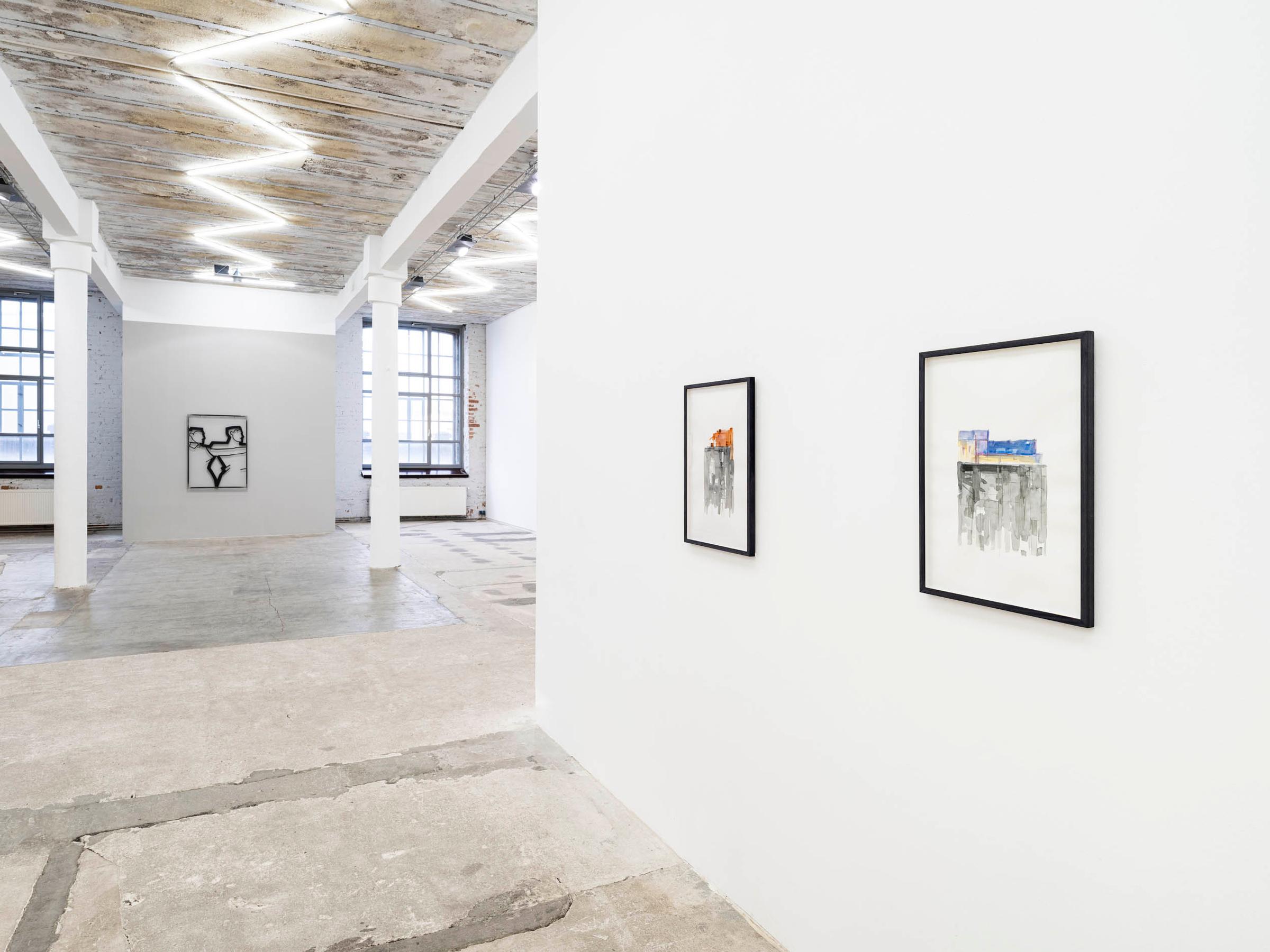
In Leipzig, the moving monument is on view in its smaller version, but not as a whole. Instead, it is divided into six parts, deconstructed, detached from its original context, and entering into new relationships with itself and with the site in which it is shown. These fragments carry different historical and political meanings within them, and in this new setting they invite a broader reflection on monuments, political change, and the ways societies engage with their historical legacies.
The fragmentation of the monument also points to the structure and dynamics of memory itself, which is always an active process shaped by present circumstances, needs, and experiences. In this way, Muja challenges the notion of history as a complete and stable image. What we see are almost abstractions: legs, torsos, book, dove, tool. Such a treatment of form, time, and space has a distinctly dreamlike quality. As Muja puts it: “Dreams bring together fragments and experiences without necessarily forming a complete or logical narrative. Something remains recognizable, but context and meaning shift. Collective memory works in a similar way: we inherit fragments of the past and continuously reconstruct their meaning.”
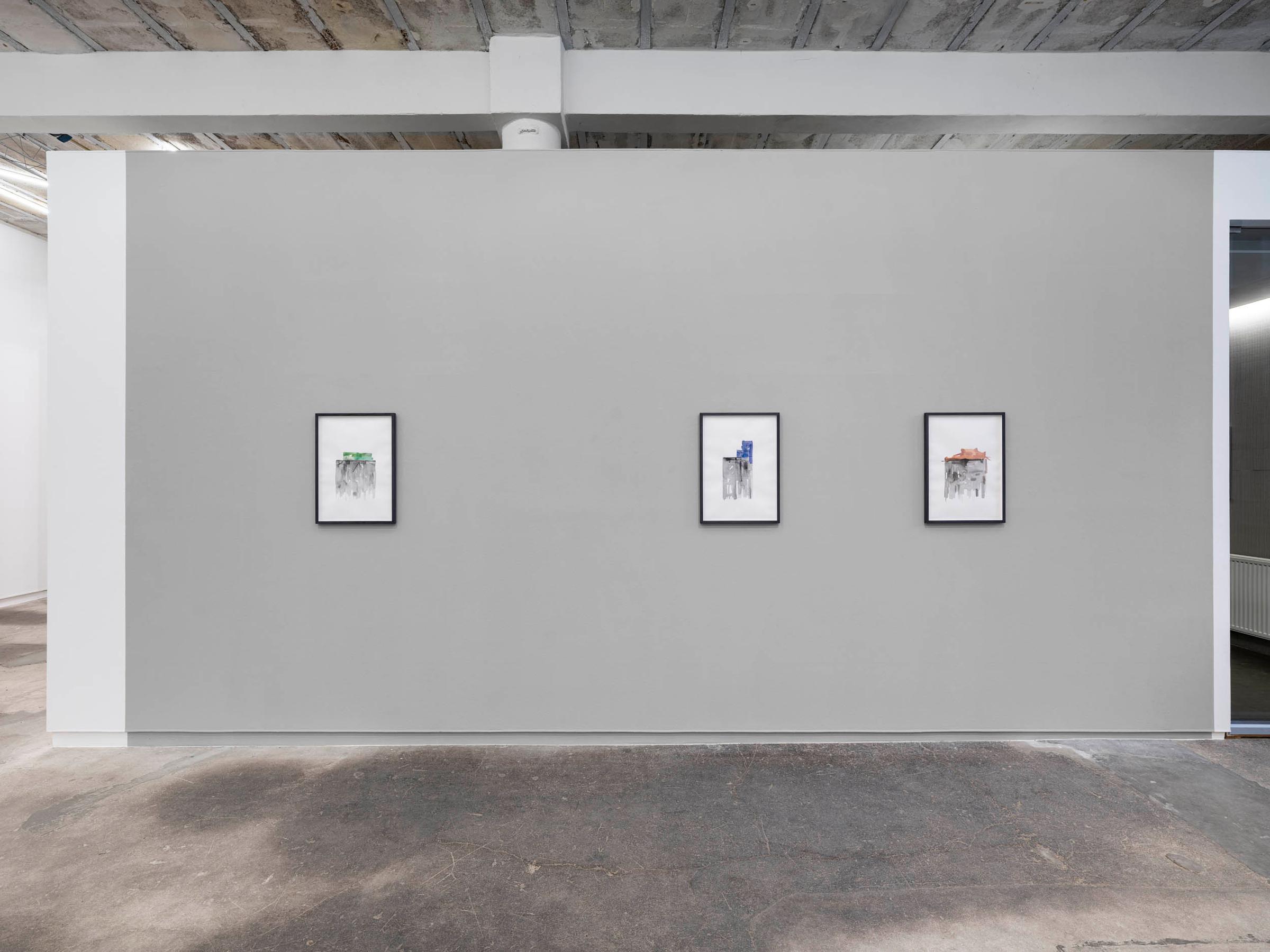
In two further bodies of work, Muja explores transformation through very different means. The thirteen-part series Blurred Legalities addresses the rapidly changing urban landscapes of postwar Kosovo after 1998/99. As large numbers of people moved into the cities, houses were hastily extended and additional floors added. What emerged was an architecture in which the boundaries between legality and illegality became blurred. Muja paints these houses, or rather suggests them. The improvisational strategies people developed under unstable social conditions are mirrored in the unpredictability of the watercolor technique he employs. The painting series Brotherhood, in turn, examines a phenomenon specific to Kosovar society: family houses as representations of male identity, pride, and status. Especially in suburban and rural areas, one encounters nearly identical buildings erected for each male member of a family, a petrified expression of patriarchal tradition and the significance of the male bloodline. It is a landscape of houses in which individual aspirations dissolve into collective patterns.
The conceptual architecture of this polyphonic exhibition, concerned with persistence and disappearance, with shared values and cultural memory, finds in Leipzig an open ground on which to build. For many years, the city has been engaged in an ongoing debate over how to deal with works of art for public space created in the GDR. Much has already been lost. Yet there is a growing recognition that what is at stake is endangered cultural heritage, and not merely the insignia of a defunct social system for which, between nostalgic glorification and posthumous total negation, very little room for thought seems to remain. The past does not disappear simply because it is dismantled or painted over.
–– Jürgen Kleindienst
We thank the Embassy of the Republic of Kosovo in Berlin and the Autostrada Biennale in Prizren for their support of this exhibition.
Alban Muja (born 1980 in Mitrovica) is a Kosovan visual artist and filmmaker based in Berlin and Prishtina. His artistic practice is deeply shaped by the social, political, and economic transformations of the Balkan region. History, memory, and socio-political questions are central to his work, which he relates to contemporary developments in Kosovo. Muja represented the Republic of Kosovo at the 58th Venice Biennale with the project Family Album, which explores displacement and identity. In 2022, he participated in Manifesta 14 in Prishtina. In 2025, he was featured in the Forum Expanded programme of the 75th Berlin International Film Festival with the film project Mua besoj më shpëtoj portreti (I believe the portrait saved me).
Artists